
Insights from research regarding Klotho-derived substances: KLOW Peptide
Plus, you might only accessibility the fresh free function on condition that you’ve got registered with them
2026-11-24Free gamble makes it possible to discover regulation, paylines, bonus possess, RTP and volatility
2026-11-24Insights from research regarding Klotho-derived substances: KLOW Peptide
The quality of sourcing is crucial for KLOW (as the accuracy of dosing and purity can differ among suppliers), due to its compounded nature. Support is provided for ligaments (muscle tissue), and tendons, which usually require weeks to heal naturally. This article explores the true nature of KLOW (its potential internal functioning), commonly discussed advantages, and the realistic evidence currently available. The ratio used in published protocols for research is standard, serving as the foundation for the aforementioned reconstitution calculations. I administer KLOW for a duration of 6 to 8 weeks during active recovery stages, ceasing once progress levels off. Typically, protocols last between 4 to 12 weeks based on the injury’s or condition’s severity.
No clinical outcomes have been confirmed for the KLOW blend in humans; social media reports of “before and after” results are anecdotal and lack controlled evidence. A definitive result in one scenario leaves unanswered questions elsewhere. Examining the material, model, route, and outcome together ensures each result remains within its true parameters. Indeed, RUO peptide capsules come with analytical documents, such as HPLC chromatograms and MS spectra, to ensure experimental repeatability and batch authentication. The amino acid backbone’s structural integrity aids in maintaining stability and reduces degradation during typical research handling practices.
While occasional missed doses are not disastrous — consistent usage yields the best outcomes. Systemic distribution takes place irrespective of the injection site, allowing for healing support throughout the body from distant injection locations. The most frequently used reconstitution volume is 4.0 mL of bacteriostatic water, resulting in a concentration of 20 mg/mL for straightforward dosing calculations.
For researchers determining suitable model systems to address their investigative queries, understanding the molecular biology of KLOW and its comparison to the similar yet distinct GLOW formulation is crucial. The U.S. has not evaluated or approved these products, and their safety and efficacy have not been confirmed. These products are not meant for consumption by humans (clinical purposes), or therapeutic use. Researchers ought to check the relevant COA to find out exactly what was analyzed and what findings were reported for a specific sample or batch. A Certificate of Analysis should be seen as analytical documentation pertaining to a specific test or sample rather than merely a marketing assertion.
Common inquiries
Separate a reported experience from a measured result. The 2018 gene-data review discusses MOTS-c peptide information before a purchase cultured-cell and computational findings; it does not demonstrate whole-body rejuvenation in people. PepT1 helped transport the small peptide into cells — and inflammatory signaling decreased under the experimental conditions. Epithelial cells form a lining; here, the intestinal lining was part of the biological question.
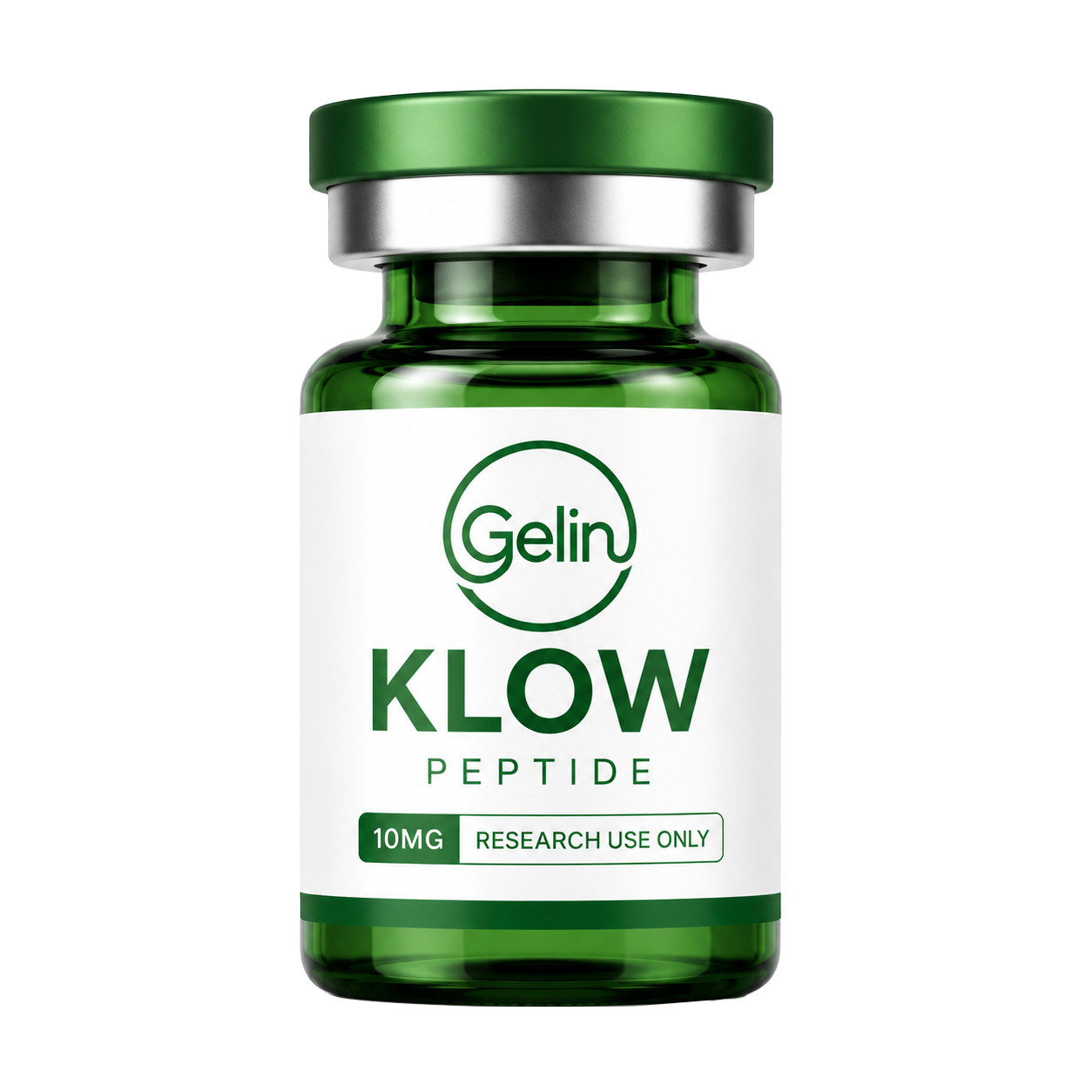
Our reputation at Real Peptides is built on the unwavering quality of our products. KLOW , Hypothesized, Subtle cellular pathway modulation, homeostatic support KLOW Its distinct modulatory role is its defining characteristic. Regenerative/Healing Promotes tissue repair, angiogenesis, anti-inflammation BPC-157, TB-500 While KLOW may support cellular resilience, it’s not a direct regenerative agent like these. Many peptides — from growth hormone secretagogues like CJC-1295 + Ipamorelin to regenerative compounds like BPC-157, have distinct and relatively well-characterized mechanisms.
The significance of the ‘Klow’ brand
Research on GHK-Cu’s gene expression effects has documented impacts on more than 30% of human genes, making it one of the most broadly acting small peptides identified in the literature. The functional consequence (increased cell migration velocity across multiple cell types) has been replicated across scratch assay and Boyden chamber experimental models. This domain is highly conserved across species, which supports its functional importance. This is a limitation worth noting explicitly for any protocol design relying on these figures. All four components are broken down through standard proteolytic pathways, meaning enzymatic cleavage into constituent amino acids that are recycled or excreted through normal metabolic routes. Whether any component crosses the blood-brain barrier (the selective filter that controls what enters brain tissue from the bloodstream) at relevant concentrations has not been directly established in humans.
Subcutaneous injection is the route that delivers all four systemically, and it’s what every protocol in this article assumes. Some people go to every other day once improvement plateaus. The standard KLOW 80 formulation is 50mg GHK-Cu (10mg KPV), 10mg BPC-157, and 10mg TB-500, for 80mg total. With a blend, the thing that matters is whether anyone measured all four peptides in the finished vial. Since KLOW is a research peptide blend, you need to buy from trusted suppliers with documented quality control.
Have the asserted advantages of KLOW been validated?
The typical administration method involves subcutaneous injections , usually in the thigh or abdomen, performed daily or every other day. When obtaining KLOW for any of these uses — prioritizing quality over price is essential. Wounds healed more quickly (there was less aggressive scar tissue formation), and the quality of healed tissue resembled normal tissue more than fragile scar material.
While this classification does not render the compounds illegal to possess in most jurisdictions, it does indicate that they aren’t sanctioned for therapeutic use in humans outside of properly structured research trials. It ranks among the most well-researched peptides for this purpose and has commercial applicability in cosmetics consequently. The four ingredients of KLOW facilitate the formation of new blood vessels through various mechanisms. The distinctive and non-redundant mechanisms by which all four components contribute to angiogenesis are a key aspect frequently emphasized in KLOW’s formulation rationale. Activation of epicardial progenitor cells and support for cardiac progenitor cell function by TB-500 has been researched in models of cardiac injury. In studies involving rodent tendon transection and crush injury models (BPC-157 has shown accelerated tendon-to-bone healing), enhanced collagen fiber organization, and reduced healing time compared to untreated controls.
